Quick answer
Finance for a start-up business works best in a set order: your own contribution first, then funding tied to a specific asset such as a vehicle or machine, then a loan secured on property if you have equity, and an unsecured loan last, because unsecured lenders size on turnover and bank statements a new business doesn't have yet. If none of those fit, trading for a few months first is a legitimate plan.
Key points
- Lenders can't look back at your trading, so they look at what sits behind the loan: your own cash in the business, an asset, property, or your personal guarantee.
- Work the ladder in order: own money, asset-backed funding, property-secured, unsecured, or wait and trade first.
- Unsecured business funding is usually sized on turnover and bank statements, so it's the hardest rung to reach before you've traded.
- A personal guarantee can make you personally liable if the business can't pay. Moneysmart warns a guarantor may lose a secured asset such as a home.
- Fund set-up assets with finance and early losses with savings; borrowing to cover losses just adds repayments to the shortfall.
Here’s the awkward truth about finance for a start-up business: most funding decisions are made by looking at what a business has already done, and yours hasn’t done anything yet. That doesn’t make funding impossible. It just changes what a lender (or you) should be looking at.
This guide gives you a ladder to work down in order, a short self-test to find your starting rung, and the mistakes that turn a sensible start into a stressful one. If you haven’t worked out how much you actually need, begin with our cost to start a business guide, then come back. This one answers the next question: how do you pay for it?
What do lenders look at when a business has no trading history?
With no bank statements to read, lenders look at what stands behind the loan: how much of your own money is going in, what asset or property could back it, your personal credit history and experience, and whether your plan covers the repayments. That is why the route you choose matters more than the lender you choose.
Think of it as four questions a lender is quietly asking:
- Are you in it too? Money you’ve put in yourself shows commitment, and it reduces how much anyone else has to carry.
- What’s behind the loan? A vehicle, a machine or property gives a lender something to fall back on when there’s no trading record.
- What’s your track record, personally? Experience in the trade and a clean-enough personal credit file count for more than usual, because you are the business.
- Do the repayments survive a slow start? A simple forecast, honestly built, beats a glossy one.
Our guide on explaining your business to a lender shows how to put those four answers on one page.
What is the funding ladder for a new business?
The ladder runs from lowest risk to highest: your own contribution, funding tied to an asset, a loan secured on property, an unsecured loan, and finally “wait and trade first”. Start at the top and move down only when the rung above can’t cover the gap.
| Rung | What it is | Fits when | Watch out for |
|---|---|---|---|
| 1. Your own contribution | Savings, a smaller start, part-time income while you build | Almost always the first step | Don’t drain the buffer for early running costs |
| 2. Asset-backed funding | Finance for a specific vehicle, machine or equipment, with the asset itself as the main security | The need is one identifiable asset that earns | Repayments start before the asset has paid for itself |
| 3. Property-secured loan | A business loan from $20,000 secured on property you or a director own | There’s real equity, and the amount is bigger than an asset can carry | The property is what’s at risk if the business can’t repay |
| 4. Unsecured funding | Cash flow or line-of-credit style funding, typically sized on turnover and bank statements | You’ve started trading and have some history | Unlikely to be available at day one |
| 5. Wait and trade first | Start small, build 3–6 months of bank statements, then apply | The plan needs more evidence than you have today | Needs enough cash to survive the wait |
Rung 2 is where many first-time owners find their answer, because a tradie’s ute or a baker’s oven gives the loan something concrete to rest on. Rung 3 is where property-secured business loans sit: on this site they run from $20,000 to $5,000,000 across first mortgages, second mortgages and caveat loans over residential or commercial property. Rung 4 is where unsecured business loans sit, and the reason they’re so far down the ladder is simple: they’re typically sized on turnover, and a new business has none.
Which rung should you start on? A five-question self-test
Answer these honestly. Write the answers down, because the pattern matters more than any single “yes”.
- Is the gap in set-up assets, or in running costs? Assets point to rungs 2 or 3. Running costs point to rung 1, or to starting smaller.
- Can you put in at least some of your own money? If yes, every later rung gets easier. If no, expect rung 1 to need work before anything else will.
- Is there one asset the money buys? A van, a machine, a coffee setup. If so, price it as asset-backed first.
- Do you or a director own property with equity? If yes, rung 3 exists for you, but it’s a decision with real downside, covered below.
- If sales arrive at half your forecast for six months, can you still make every repayment? If the answer is no, the plan needs to be smaller, or the borrowing does.
Mostly rung 1 and 2 answers: you’re probably looking at a modest, asset-led start. A yes on question 4: you have more options, and more to think about. A no on question 5: it’s “not yet”, and that’s useful information, not a failure.
For a quicker read on your own situation, the 2-minute funding profile lines up options by stage and goal.
Should you use property or a personal guarantee to fund a start-up?
Property or a personal guarantee can open up funding a new business otherwise can’t reach, but both put something personal on the line. Use them only if the business still carries its repayments when sales are slower than forecast, and only after you’ve read exactly what you’re signing.
Moneysmart’s guidance on going guarantor is blunt about the risk: if the borrower can’t pay, a guarantor may have to repay the whole loan, and may lose a secured asset such as a home or car. When you are the person behind the business, that guarantor is you.
Questions worth asking before you sign anything:
- What exactly does the guarantee or security cover, the whole loan or part of it?
- What happens to the property or the guarantee if the business is sold, closed or restructured?
- Would asset finance, a smaller loan or a later start do the same job with less at stake?
- Has an independent accountant or solicitor read the paperwork, not just the lender?
Handled carefully, property can be a sensible way to fund a fit-out or equipment with no trading history. Handled casually, it’s how a business idea becomes a family problem. If you’d like a person to talk it through with you, you can check your options here.
Are there grants or other funding for new businesses?
Some, but they’re narrower than most owners hope. Grants and programs are generally aimed at a particular industry, region, purpose or type of owner, rather than every new business. The free grants and programs finder on business.gov.au is the quickest way to see whether anything fits you.
The finder takes under five minutes. You answer questions about your location, industry, business structure and stage, and it shows programs you may be eligible for, with filters for open, coming soon and closed. A few practical habits:
- Shortlist, then read the fine print. The finder matches on your answers, but eligibility is set by each program.
- Check back. New programs are launched often, so a “nothing today” result isn’t permanent.
- Don’t build the plan around a grant. Treat any grant as a bonus. Most are paid after the money is spent, or only partly cover costs, so you still need the cash to start.
What should you fund with finance, and what with savings?
Fund assets that last and earn with finance, and fund the early losses with savings. A vehicle, machine or fit-out helps pay for its own repayments. Rent, wages and your own living costs during a slow start do not, so borrowing for them just adds repayments to the shortfall.
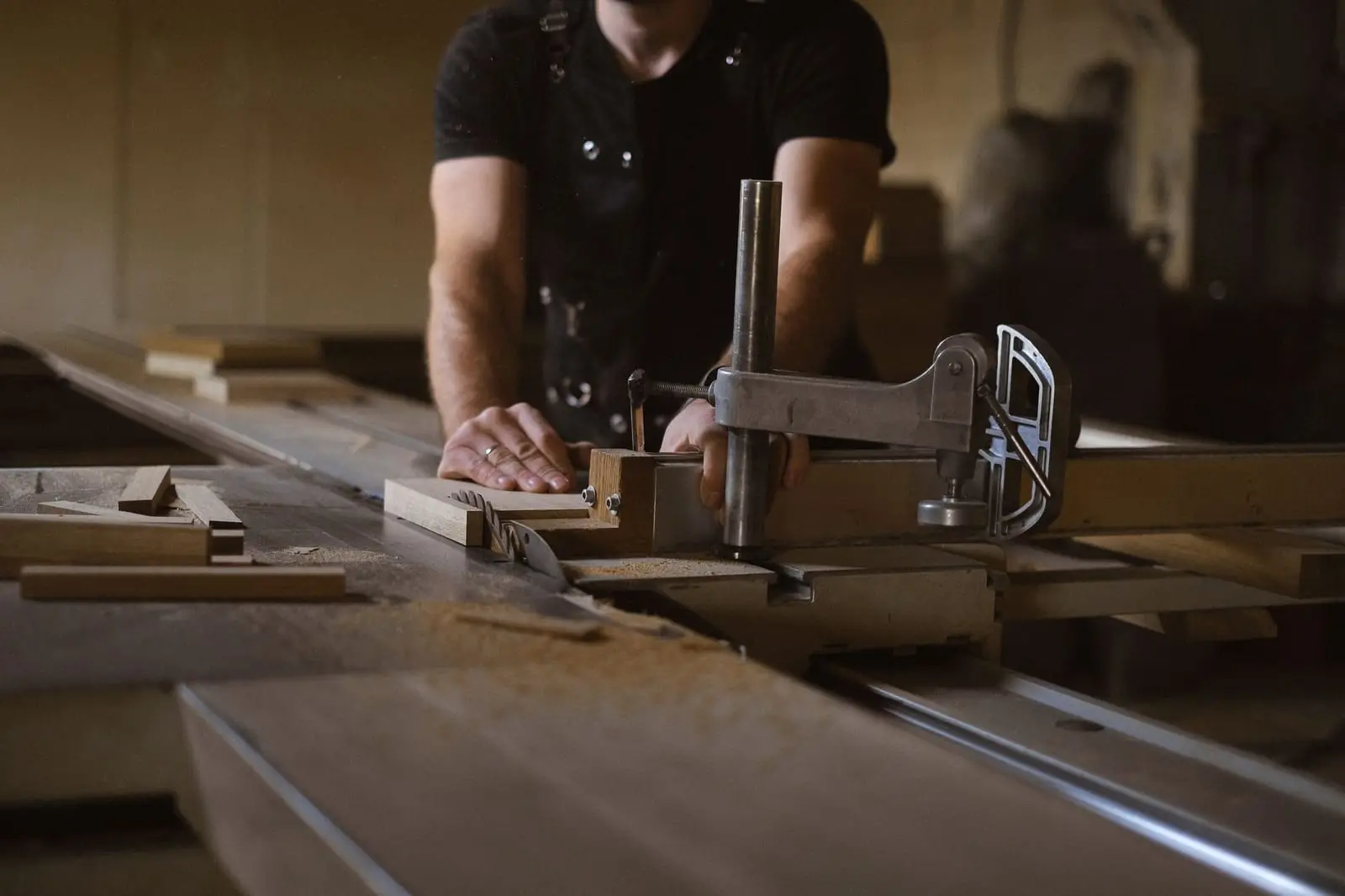
An illustrative example (not a quote): an owner starting a small joinery workshop needs a saw bench, dust extraction and a van. Say that’s about $70k of set-up assets, plus about $30k to cover three months of rent, materials and their own living costs while orders build. Sensible split: some personal contribution towards the assets, asset-backed funding for the rest of the equipment, and the $30k held in savings as the running-cost buffer. The owner who borrows the $30k as well has taken on repayments before the first invoice is paid.
The official start-up guidance on business.gov.au suggests being able to cover six months or more of running costs when you start. If that number looks out of reach, a smaller start is a better answer than a bigger loan.
One tax detail worth a conversation with your accountant: the $20,000 instant asset write-off for eligible small businesses became permanent from 1 July 2026, per business.gov.au’s summary of the changes. That can change the real cost of a smaller piece of equipment, though it doesn’t change whether you can afford the repayment.
Common mistakes when financing a start-up
- Applying everywhere at once. Every application is a mark against you somewhere, and a scattergun approach signals that you don’t know what fits. Know your rung first.
- Borrowing the running costs. It feels like a buffer. It’s a repayment on your own losses.
- Skipping the personal credit check. Your personal file is your track record. Look at it before a lender does.
- A forecast that only works if everything goes right. Build the half-speed version too.
- Mixing personal and business money. Clean business bank statements from day one are what make unsecured funding possible later. Our starting-out hub has the set-up checklist.
- Signing a guarantee you haven’t read. See the section above.
Ready to see which rung fits you?
Starting a business is exciting, and it’s also the moment good advice is cheapest and a wrong turn is most expensive. If you’ve worked out your start-up number and you can see a gap in set-up assets, equipment or a fit-out, there may be a sensible way to fill it without draining the cash you need for your first few months.
Finding out where you stand takes about 60 seconds. There’s no credit check when you first enquire, so asking won’t touch your credit file. We don’t send your details to a pile of lenders either, so your phone won’t be buzzing with strangers. A real person reads your answers, thinks about your individual situation and calls you to talk it through, including the “not yet, here’s what to do first” answer if that’s the honest one.
Please fill in the form accurately: what you’re starting, roughly how much you need and what it’s for. Honest answers let us point you to the option that actually fits the first time.
Ready when you are
Check your options in about 60 seconds
A few quick questions. Asking won't touch your credit file, your details aren't sent to a pile of lenders, and a real person reads every enquiry.
Frequently asked questions
Can I get a business loan for a new business with no trading history?
Sometimes, but the route matters. Unsecured business funding is normally sized on turnover and bank statements, so it's unlikely before you've traded. Funding tied to an asset such as a vehicle or machine, or a property-secured business loan from $20,000 where you or a director own property with equity, can be possible with no trading history.
How do I finance a start-up with no savings?
It's hard, and worth being honest about. Lenders generally want to see you've put something in yourself. Without savings, look at whether you can start smaller, keep part-time income while you build, apply for a government grant or program you qualify for, or use an asset you already own as security. Borrowing the whole start-up cost with nothing behind it rarely works.
What do lenders look at for a start-up?
With no trading record, they look at you and the plan: how much of your own money is going in, your personal credit history, any experience in the industry, the asset or property that could back the loan, and whether a realistic forecast covers the repayments. A clear one-page explanation of the business helps.
Should I use my home as security for a start-up loan?
Only if the numbers still work when sales arrive twice as slowly as you hope. Property can open up options that don't exist otherwise, but if the business can't repay, the property is what's at risk. Consider whether asset finance, a smaller start or waiting would meet the need with less risk.
What is a personal guarantee on a business loan?
It's a promise that you'll repay the debt personally if the business can't. Moneysmart explains that a guarantor may have to repay the whole loan and could lose a secured asset such as a home or car. Read exactly what the guarantee covers before signing, and get independent accounting and legal advice.
Are there government grants for start-up businesses in Australia?
Some, but fewer than people expect, and most are targeted by industry, location or purpose rather than open to every new business. business.gov.au has a free grants and programs finder that matches programs to your location, industry, structure and stage. Check the finder regularly, since new programs are launched often.
Is it better to save up or borrow to start a business?
Borrow for things that last and help earn, such as equipment, a vehicle or a fit-out. Save for the early losses and the running costs while customers build up. If the plan only works on the hopeful version of your sales forecast, saving longer or starting smaller is usually the stronger choice.